If you have any questions about our product, I’d be happy to chat!

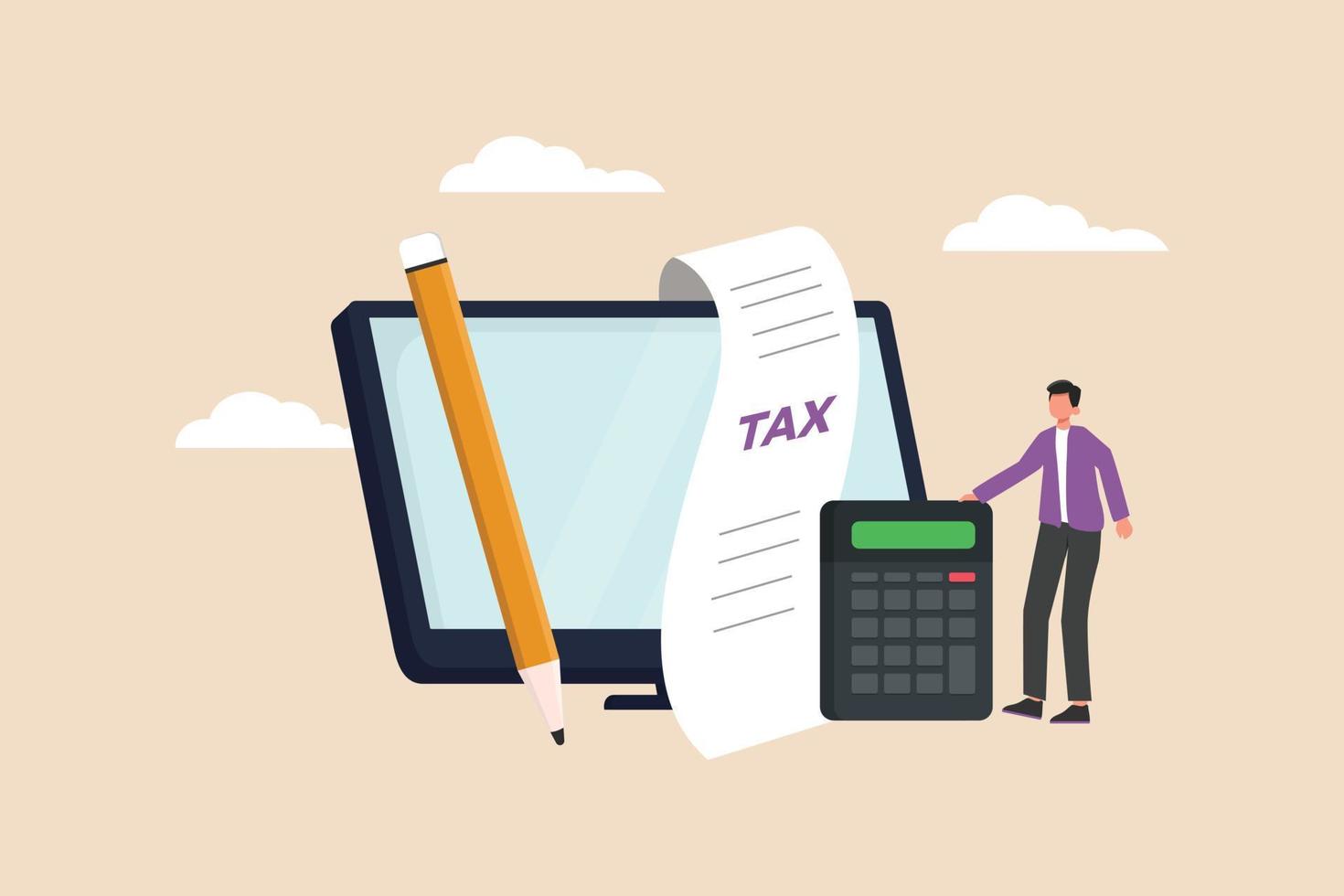
The U.S. government charges a sales tax on purchasing goods and services. Retailers typically collect sales tax at the point of sale and then transfer it to the government. This has been a somewhat perplexing enterprise from the beginning of commerce, and digital products have made it even more so.
Each of the many aspects that go into making sales tax compliance and financial reporting in the U.S. so complicated is one that SaaS companies must know.
U.S. filing for sales tax and eligibility varies from state to state with each existing regulation and protocol. The U.S. classifies software into three groups: downloaded, tangible, and cloud-based.
SaaS is an example of cloud-based software. This software is hosted on a server and can be accessed by clients using the internet.
Depending on the country, various types of consumption taxes apply. Either a flat fee on each transaction or a percentage of the whole sum. Certain things are needed from the business owner for each type.
The European Union has a Value-Added Tax, and Australia has a Goods-And-Services Tax. Consumption taxes have several names since they can all operate somewhat differently.
A SaaS product is distinct from the traditional digital item you purchase online and is taxed differently.
You should check to see if your offering is genuinely SaaS or software-as-a-service. Make sure you fall under the definition of a taxable product.
Most states use “tangible personal property” as the benchmark for what is taxable. If you think about it, the definition of “tangible” in this context is “perceptible by the senses,” which makes perfect sense. States have been slow to designate SaaS as taxable because it is a relatively young industry, and you can’t touch, feel, smell, hear, or taste a license to use the software.
SaaS has been reclassified as tangible personal property, which has prompted the governments to start taxing it.
Some states tax SaaS because they treat it the same as software that is downloaded electronically. Some people consider it a service, and some states don’t even tax services.
Nevertheless, given the SaaS industry’s rapid expansion, any state that has yet to tax SaaS will undoubtedly find a way to do so very soon. These laws change quickly.
Currently, the following U.S. states tax SaaS products:
The threshold is a set sum of money in that nation’s currency. Your business must register for local taxes once its sales exceed the threshold.
Although “annual sales” is widely known in threshold definitions, this term can also refer to sales that occur inside a single calendar year. However, not all policies apply from January to December. The “annual sales” could refer to how much you sold in the previous 12 months or how much you anticipate selling in the following 12.
State governments in the U.S. are enacting new legislation to impose sales tax obligations on remote and internet sellers. This is called the Economic Nexus.
An economic nexus is a factor in tax obligation based on your company’s financial activity or the volume of sales you generate in a given state.
Here’s some standard information you’ll need when registering for a U.S. sales tax permit:
Investors scrutinize how you manage the firm presently and how you intend to grow it before investing in any funding event (public or private). This involves paying taxes. Unfavorable audit findings or mismanaged sales and use tax might affect valuation, endanger funding, or even invalidate deals.
You can also increase your tax liability, depending on how you intend to use that financing, you can also increase your tax liability. Building out affiliate programs, investing in product development or R&D, hiring remote sales staff—these expansion strategies may affect or increase your sales and use tax compliance obligations.
Tech and software firms are innovators. Taxing authorities are not. Digital products and services confuse them. Certain states, like Washington, specifically include digital goods and services in their tax laws. Others, such as Texas, classify digital items as taxable tangible personal property by relying on the current legal framework. Others still haven’t updated their legislation, so it’s up to the business to decide. Software and digital goods and services are currently taxed in the U.S. in a variety of ways based on a wide range of separate categories, including:
More frequently, audits are selected for businesses with a more extensive profile and significant revenues. Moreover, you can be subject to several audits if you have a multi-state nexus. Although this high visibility is fantastic for growth, it may also be a magnet for states and state auditors seeking to increase their tax collections from successful ventures.
Most goods, services, and other items sold or consumed in Australia are subject to the 10% goods and services tax (GST). If your company is GST-registered, you must collect this additional sum (an eighth of the sale price) from your consumers. You give this to the Australian Taxation Office (ATO) when it becomes due.
Before registering for standard GST, you must have an Australian business number (ABN). An ABN can be obtained either when your business name is first registered or at a later date.
You can register for GST after receiving your ABN:
You must register if:
Online registration for VAT is usually possible.
By doing this, you’ll create a VAT online account (also known as a “Government Gateway account”) and register for VAT. You must have this to submit your VAT Returns to H.M. Revenue and Customs (HMRC).
To submit your VAT Returns and communicate with HMRC on your behalf, you can designate an accountant (or agent).
When you get your VAT number and choose the “VAT submit returns” option, you can still register for a VAT online account even if you’re using an agent.
Following registration, you’ll receive the following:
Acquire a current U.S. sales tax permit for each state in which you have nexus. Tax fraud results from failure to do so.
The “Streamlined Sales Tax (SST) Registration System” is another option for registration. SST was developed to make collecting sales tax simpler. Currently, the Streamlined Sales and Use Tax Agreement is ratified by 24 states. Once you have registered, you will get the necessary I.D. and permit.
Once registered and you get the required I.D.s or permissions, you should start applying the tax to your transactions.
The first thing to consider is whether you should list your SaaS costs on your website, including taxes.
Since many countries don’t require tax-inclusive pricing, taxes are frequently added at the point of sale in those nations. However, it’s a good idea to bring up sales taxes in advance is a good idea. It has been demonstrated that preventing sticker shock at the last minute increases conversion rates at checkout.
It only makes sense to keep correct records and documentation for taxes if you’re going to all that trouble to compute and collect them.
All the details needed by the tax authorities in the event of an audit, including the buyer’s identification, the things they purchased, a special invoice reference number, the date, and a breakdown of the sales taxes.
If you are issuing a full or partial refund, you must create a credit note to serve as proof of the reimbursement. You can avoid paying taxes you don’t need to in this way.
Secure digital records should be kept for a long time. This will make it simple for you to provide any documents needed for audits.
On each state’s Department of Revenue website, you can submit sales tax returns individually. Make sure to note the following:
On the state Department of Revenue website, you can submit state sales tax returns online. However, the entire process leading up to that is quite challenging.
Adopting appropriate accounting procedures for the SaaS business model is crucial to efficient tax planning and compliance.
All firms should adhere to the Generally Accepted Accounting Principles (GAAP), which are almost identical to the International Financial Reporting Standards (IFRS). However, there are a few business procedures that SaaS companies, in particular, must follow.
Accrual accounting distinguishes when a service is rendered instead of when a payment is paid.
Because the SaaS business model involves upfront payments for services that are provided over time, accrual accounting is crucial. As the service is rendered, income is recognized. Accrual accounting accurately captures all of this.
Your perception of your company’s performance, mainly how you report it, is influenced by revenue recognition.
The Financial Accounting Standards Board (FASB) states that revenue recognition aims to convey relevant information about the nature, amount, timing, and uncertainty of revenue from contracts with customers to consumers of financial statements.
The “statement of financial position,” often known as a SaaS income statement, is an important document. It keeps track of every revenue, running costs, non-operating costs, taxes, and profit. Additionally, it aids decision-making and helps you, investors, and other stakeholders better understand the company’s success.
The relevant data for this report is based on all the accounting rules mentioned above. As a result, you’ll have all the necessary data at your disposal when it’s time to construct a SaaS income statement.
You should continually monitor your company’s burn rate to understand your cash flow better. You can assess the short- and long-term profitability of your SaaS by keeping an eye on each of these. Regardless of the stage of growth your company is now in, learn about the most crucial SaaS metrics and start implementing the ones that apply to it.
Actionable insights, strategies, and updates to help B2B businesses grow through SEO and performance marketing.




We’d love to hear from you. Fill out the form and let’s start building something amazing together.



 Sales
Sales