If you have any questions about our product, I’d be happy to chat!

Content marketing can improve lead generation, boost sales, increase awareness and increase conversion rates for your company. Proper planning is necessary for successful content marketing for SaaS companies because it needs a unique approach, different from other companies.
This guide discusses how to approach SaaS content marketing, so you can get to planning and experience the benefits.
SaaS is an industry that relies heavily on the value of its software. Your audience has to understand why they should buy from you and not from a competitor. When designing a content marketing strategy for your SaaS company, it’s good to know that it’s different in various ways:
Besides the product you sell, your customers must be sure of the support you provide. They want quality support in case of any trouble with the software. As a result, content marketing strategies for SaaS promote both the product and the support customers will get.
While creating marketing content for your SaaS company, it’s good to remember that potential buyers research the internet for products and services. They check white papers, product reviews, and various app marketplaces.
Your overall SaaS marketing strategy should prioritize search engine optimization to provide higher chances of winning customers from these platforms.
Effective SaaS content marketing requires a plan with the right goals, reach, and channels for reaching your audience. The content marketing plan for SaaS should also address content creation and tracking of the results after initiating the campaign.
Steps for effective content marketing for SaaS strategy:
To succeed, you have to employ SaaS content marketing best practices. Let’s examine the steps individually.
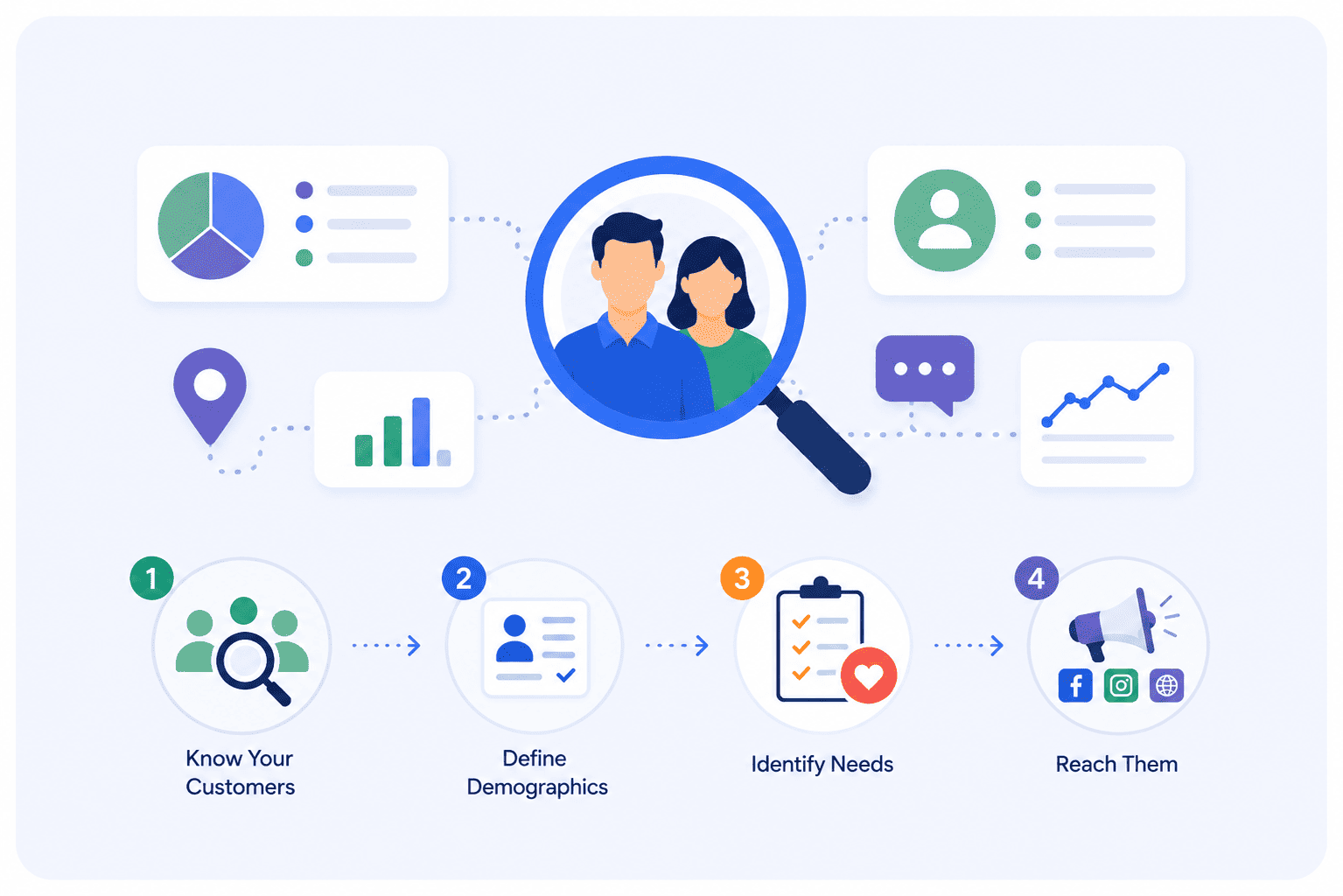
Your goal with most SaaS content marketing campaigns is to reach out to new prospects and convert them into customers. Understanding your audience will enable the creation of a tailor-made campaign. You’ll find it easy to connect with your audience.
Some factors to look at when defining your audience include:
The elements may vary depending on your product. Once you know the characteristics of your customer, it’s time to create a profile. The aim is to personify this imaginary character before creating SaaS marketing content for real-world characters. Your profile characteristics should be close to the real-life customer.
The good thing is that social media platforms have analytics tools that enable you to see the characteristics of your followers. You will understand your followers’ details, which can guide you in finding more prospects.
If your product can serve more than one target market, you can create multiple distinct profiles. Don’t create too many profiles because they can make you lose focus. You want to work with the least number of profiles to manage your marketing campaign easily.
Identifying pain points aims to create a marketing strategy tailored to their needs. This comes after defining your audience because you want to understand what drives their purchasing decisions.
Develop a customer journey map to understand how your customers move from prospects to actual buyers. The journey map will outline the steps followed by your customers as they travel through the sales funnel. Typical steps include:
Every step may come with challenges that may affect their decision concerning retention. Some pitfalls they could encounter include:
As you create your SaaS marketing content, ensure it addresses pain points that can guide them to seek a solution provided by your product or similar product. The most important part of the consumer journey is signing up for the first time, so ensure you create compelling content.
Various elements can determine the pain points you will address, and they include:
Understand that your industry and audience can determine the pain points you address. This means some industries may have unique pain points that need to be addressed. Include the pain points in the content marketing plan to ensure that potential customers can analyze how beneficial your product will be to them.
Customers use keywords to search for businesses online. This happens at every stage of the customer journey. They’ll use keywords when:
You must identify typical keyword terms used at every stage during the customer journey. They will help you generate content that addresses customer needs at every step. Since customers want software that can care for their needs, you position yourself to gain more conversions. The customers will be more satisfied, leading to a higher retention rate.
Various content marketing SaaS tools can help you identify the specific keywords in your industry. Some of them include the following:
A vital tool for SaaS marketers as it helps find out what words people are searching for that are related to your business, traffic volume, and other essential information. You’ll know the best topics to write about and the type of language to use.
This all-in-one search engine optimization tool helps you determine how well your website is ranked in Google’s search results. It also allows you to see what keywords people use to find your site and where they’re coming from (such as YouTube or Facebook). You’ll also see the keywords competitors are ranking for, plus information about backlinks, traffic, e.t.c.
It is an excellent tool that helps you find, track and manage your backlinks. You can use it to research your competitors’ backlinks, find new and relevant keywords for your site, and see what people are linking to on your site.
This tool tells you how well your site ranks in search engines and gives you a score. It allows for keyword research and site audits, making you understand what you can improve to rank higher. Moz also provides backlink analysis.
When marketing on social media, BuzzSummo will help you identify trending topics, market influencers, and the topics competitors write about.
Using these tools, you can identify relevant keywords that will improve the quality of the content you write.
When creating your content marketing strategy, figure out what you want to accomplish. It will help you measure the success of your content marketing efforts. Without this information, it’s difficult to determine what is working and what isn’t, so you won’t be able to tweak or improve your content.
Your goals can be tied to business growth and revenue generation. You can also consider improving your customer experience, increasing customer retention, or ensuring customers get the most value from your product.
While key performance indicators (KPIs) like bounce rate and session duration applies to content marketing across all industries, some are unique to SaaS content marketing. SaaS marketing metrics include:
You need a plan to help you organize and manage the content creation process. Since you already know the keywords to target and the goals to look for, it’s time to create content. Here are some defined steps to streamline the content production process:
Conduct exhaustive research without underestimating any keywords. Remember you want to create content that will boost your brand’s visibility. The voice search tool can make the research process faster.
The keywords you identified should help you prioritize content creation. You know the sequence of your audience’s content. Create long and short-form content, and incorporate graphics. Don’t schedule content far in advance because you’ll want to write about any industry developments.
Ensure you work with a reliable team. The best approach is to get thought leaders in your industry because they understand the topics better. You can work with freelancers for flexibility.
Know the purpose of every piece your team creates, whether you aim for brand awareness, lead generation, or generally educating the audience. The identified pain points should guide you in creating content that addresses the audience’s needs.
How much content does your audience need per month? The best way is to analyze your capacity and then set a regular schedule that you can sustain. Look at the goals you want to achieve, your budget, and your resources.
The content distribution strategy establishes how you will share the content. It also outlines the platforms on which the content will be available and the mode of promoting it. Some issues to address in the distribution strategy:
You can get a marketing automation tool to assist with uploading content to your website. Many of the tools can be synchronized with your social media profiles. It will help eliminate the need for manual content uploading to various platforms.
The only way to know if your marketing campaign achieves the desired outcome is to monitor your results. Your results should align with the key performance indicators (KPIs) identified when setting your goals. Develop a reporting system to track the KPIs. For instance, if the campaign’s goal is to get people to renew their subscriptions, have it included in the campaign results tracking.
You can use analytics software that displays the results. Good software has a dashboard for display, and you can get results in graphics in forms of, for example, percentages or charts. You can set up a standard period for the review of the KPIs.
You can constantly adjust when your campaign does not achieve the set goals. For underperforming pieces, apply split testing to see if the results change with the adjustments you make to the content. Some adjustments include adding images and videos, tweaking the headline, and even changing the font. These changes can bring a massive improvement to the results.
You can look at the topics and content pieces that produce the most desired results and focus your efforts on promoting them. This can also help your approach to creating other content.
Identifying your audience is the most important place to start for your SaaS content marketing. What does their job entail? What do they struggle with? What are their most significant pain points? How can you solve their problems? Once you know this information, developing content ideas that resonate with them will be much easier.
If your audience is made up of busy professionals, they probably don’t want long-form blog posts because they don’t have too much time at their disposal. They will need quick tips and tricks that they can reference when they need to, so keep the content short.
Other areas to look for ideas include:
Creating SaaS content requires a good plan to ensure it is engaging. To make sure your content converts, consider the following:
For customers to trust you, the content you generate must show that you are an expert in your field. And because many SaaS products deal with complex sectors, you must understand your industry thoroughly. It’s the only way to know the challenges and needs of your customers.
Writing content to cover areas of expertise can boost the performance of your SaaS marketing campaign. Find core topics in your industry and compose detailed content about them. It will do better than shallow content with many unrelated keywords.
Before you can start creating content, ensure you have topics that will make you communicate as an expert, then find the right keywords for them. Every expert topic has semantically related keywords, making your content look genuine.
SaaS content must satisfy the customer at every stage of the customer journey. Creating content for every funnel stage can help achieve this. The steps in the funnel include awareness, consideration, decision-making, retention, and advocacy.
50% of your content should focus on creating awareness about your product. Customers know they have a problem but don’t know how to solve it. Your content should be focused on how you will help them solve.
This stage focuses on why the audience needs to consider your brand. It can take up 30% of your content. The customer will have multiple questions, so make sure your content answers them satisfactorily.
Since the customer is aware of your brand and how it can help them, you have to make them understand why they need to sign up for your product now rather than later. Emphasize the benefits and the effect of delaying the sign-up. This content can occupy 15% of the overall content volume.
Give your customers quality service to ensure they remain loyal to your brand. Emphasize customer service and overall support of the program. Your customers want to be supported whenever they face a problem.
Quality SaaS marketing content can help drive traffic and increase conversion rate. Here are a few ways to ensure the content provides value to your audience.
Provide an excellent user experience, ensuring your content has short, easy-to-read sentences and incorporates images and other graphics
SaaS businesses have a unique opportunity in the digital realm to reach new customers on relevant sites with conversational and value-driven content. If you follow the content marketing best practices for SaaS companies, you will reap better results.
Actionable insights, strategies, and updates to help B2B businesses grow through SEO and performance marketing.




We’d love to hear from you. Fill out the form and let’s start building something amazing together.



 Marketing